Weather Patterns Reshaping Betting Approaches in Horse Racing and Tennis Events
Jakob Hartmann · Jun 16, 2026
Weather Patterns Reshaping Betting Approaches in Horse Racing and Tennis Events
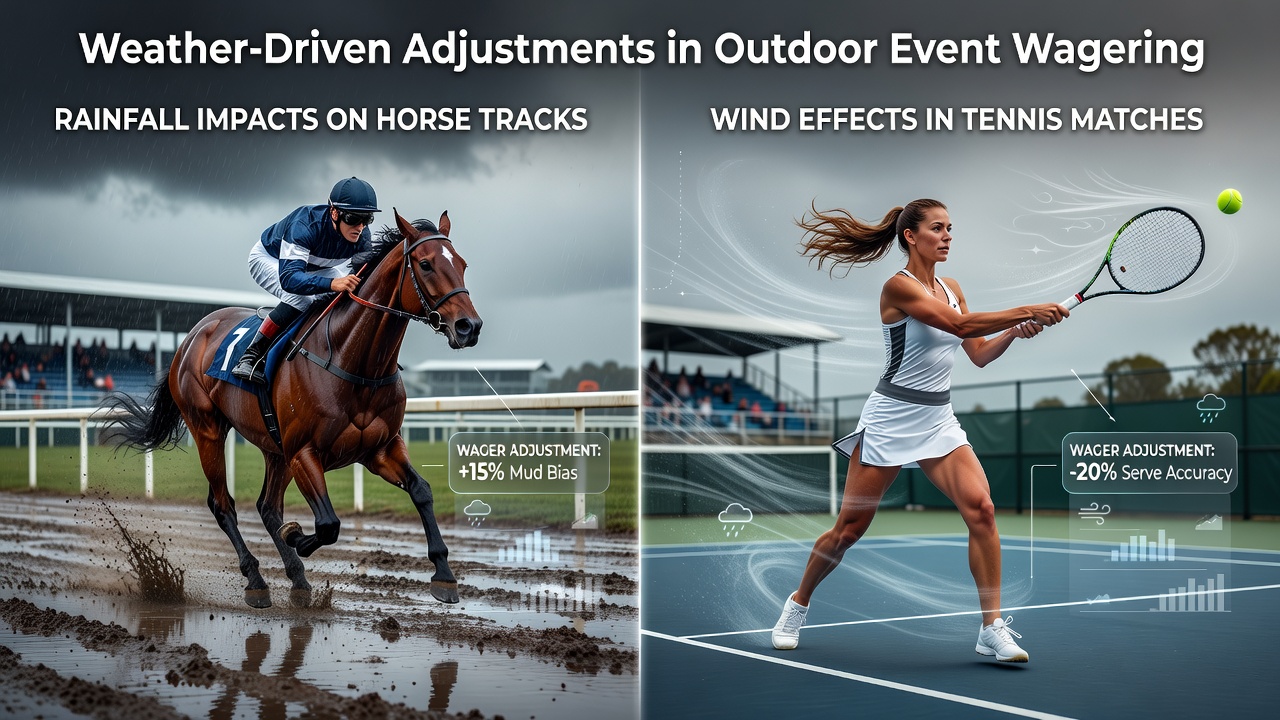
Weather conditions exert measurable effects on outdoor sporting events and the associated wagering markets that follow them. Rainfall changes track surfaces in horse racing while wind alters ball trajectories in tennis matches. Bettors and analysts track these variables because they shift probabilities and odds across different betting platforms. Observers note that June 2026 brought several high-profile outdoor fixtures where precipitation and gust patterns required real-time adjustments in risk models.
Rainfall Effects on Equine Track Surfaces
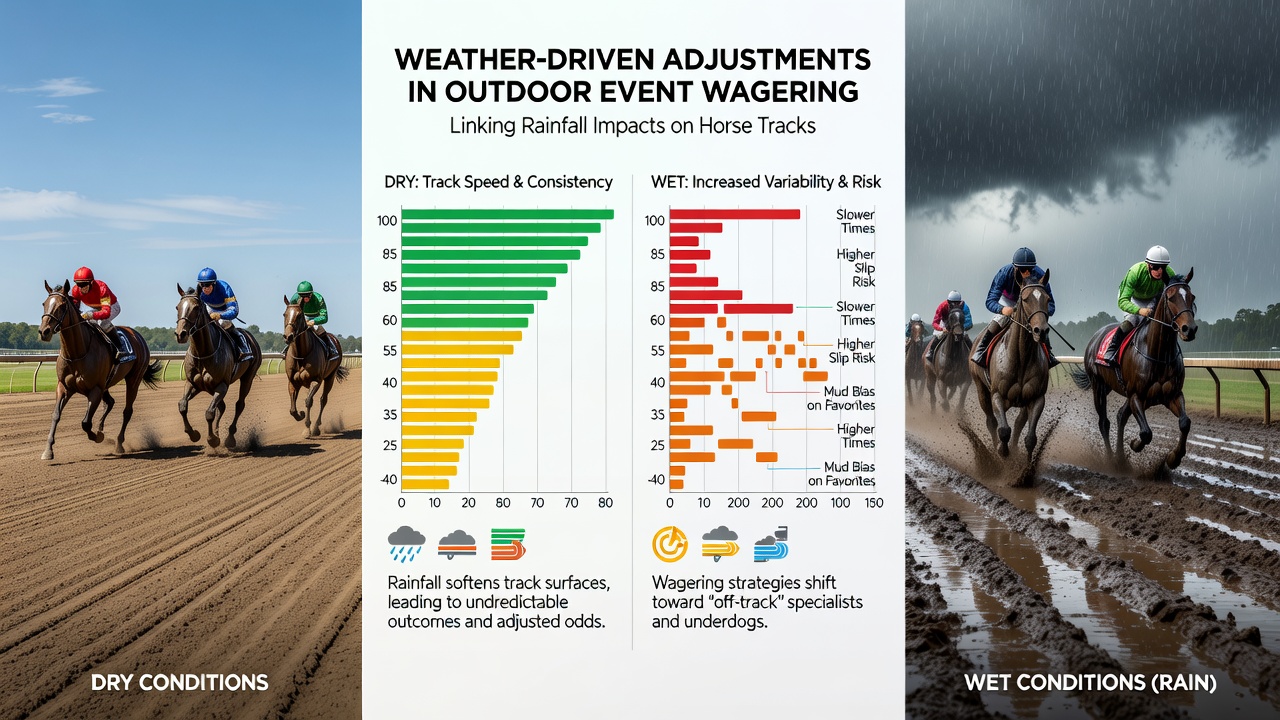
Precipitation modifies soil composition and moisture levels on racetracks which in turn influences horse performance and race times. Data from meteorological records show that even moderate rainfall increases track moisture content and creates softer going that favors certain horses while slowing others. Analysts compile historical results from events held under varying rainfall amounts to identify patterns in finishing positions and sectional times. Those patterns feed into updated probability models used by professional syndicates and casual punters alike.
Track officials classify surfaces using standardized terms such as firm, good, yielding, and heavy. Each classification corresponds to measurable changes in average race speeds and favorite win rates. Studies conducted by university researchers in Australia demonstrate that heavy tracks reduce the success rate of front-running horses by measurable margins compared with firm conditions. Wagering markets respond by lengthening odds on speed-oriented runners and shortening them on those known for stamina on softer ground.
Wind Influences on Tennis Court Play
Air movement across outdoor courts affects serve accuracy, rally length, and error frequency. Strong crosswinds push balls off intended lines while tailwinds extend shot distances beyond baseline expectations. Professional data providers record wind speed and direction at tournament venues and correlate those readings with point-by-point statistics. The resulting datasets reveal that players with topspin-heavy styles maintain higher win percentages under windy conditions than flat-hitters who rely on precise placement.
Tournament organizers publish daily weather summaries that include sustained wind speeds and gust forecasts. Bettors incorporate these figures into live odds calculations especially during matches on exposed courts such as those at coastal venues. Research compiled by Tennis Australia indicates that matches played in winds exceeding 25 kilometers per hour produce higher rates of unforced errors on both sides of the net. Markets adjust accordingly with totals markets moving toward the under when strong winds are forecast.
Connecting Track and Court Variables for Wager Adjustments
Market makers and independent analysts draw parallels between rainfall data from racing venues and wind readings from tennis tournaments when constructing multi-sport accumulator selections. The practice involves weighting each environmental factor according to its historical impact on final outcomes. For instance a race meeting forecast to receive steady rain receives different odds treatment than one expected to remain dry while a tennis tournament under windy conditions prompts shifts in game totals and player performance props.
Statistical services aggregate weather observations from global networks and merge them with performance databases. The combined information allows models to generate adjusted probabilities that reflect current atmospheric conditions rather than long-term averages. In June 2026 several major racing festivals and tennis opens occurred within the same fortnight and operators reported increased activity in cross-sport bets that accounted for simultaneous weather influences at distant venues.
Regulatory bodies in multiple regions require transparent disclosure of data sources used in odds compilation. The American Meteorological Society supplies standardized weather metrics that several betting operators integrate into their systems. Similarly the International Tennis Federation maintains records of environmental conditions at sanctioned events and these records support independent verification of market movements tied to weather.
Practical Implementation in Current Markets
Operators update odds boards when official weather services issue revised forecasts. Morning rainfall projections at a racecourse can shift morning line odds before the first race while afternoon wind advisories at a tennis stadium prompt adjustments in live betting windows. Syndicates employ meteorologists alongside handicappers to interpret these signals and place wagers accordingly.
Publicly available datasets allow individual bettors to replicate portions of professional analysis. Government weather agencies publish hourly observations and historical archives that cover most major sporting venues. Those who cross-reference rainfall totals with past race results or wind speeds with past match statistics obtain measurable edges in markets that price environmental risk less efficiently.
Conclusion
Weather remains an observable input that alters both athletic performance and market pricing in horse racing and tennis. Rainfall on tracks and wind across courts generate quantifiable shifts in outcomes that appear consistently in historical records. Analysts and operators continue to refine models that incorporate these variables so that odds reflect real-time atmospheric conditions rather than static assumptions. The same datasets that support these adjustments remain accessible for anyone seeking to align wagers with environmental realities.