Stadium Shadows: How Venue-Specific Metrics Shape Layered Selections Across Court and Field Events
Jakob Hartmann · Jul 21, 2026
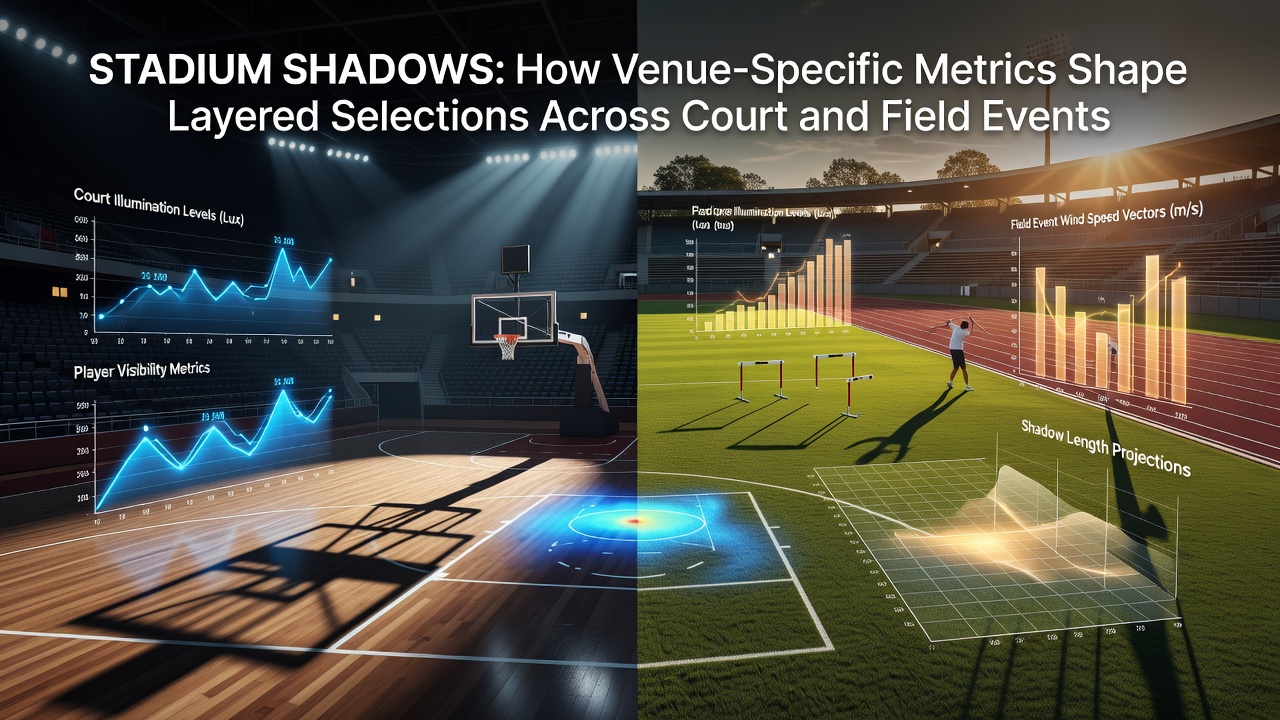
Stadium Shadows: How Venue-Specific Metrics Shape Layered Selections Across Court and Field Events
Venue-specific metrics have long influenced performance data across tennis courts, basketball arenas, and racing tracks, with analysts tracking factors such as surface friction, altitude adjustments, and lighting variations to refine layered selections. These elements combine to create patterns that shape accumulator strategies spanning multiple disciplines, where data from one sport informs choices in another. Researchers at institutions like the University of Queensland have documented how humidity levels at outdoor courts alter ball bounce rates, while indoor basketball venues introduce distinct rebound statistics tied to ceiling height and crowd density.
Court-Based Metrics and Their Role in Layered Picks
Tennis surfaces present measurable differences that extend beyond simple win rates, as clay courts slow ball speed by up to 15 percent compared with grass according to International Tennis Federation records. Observers note that these variations affect set durations and error margins, allowing selectors to layer tennis outcomes with basketball props when venues share similar environmental profiles. Basketball arenas add another dimension through parquet floor compositions and rim heights calibrated to league standards, where home-team shooting percentages rise by an average of 4.2 percent in familiar settings per NCAA performance logs. Such figures guide multi-sport combinations, particularly when July 2026 schedules overlap with major tennis tournaments and summer league games.
Field and Track Conditions Across Racing and Team Events
Field events introduce variables like turf moisture and track gradients that alter stride lengths in horse racing, with data from the Australian Racing Board showing that softer ground increases race times by 2 to 4 seconds over 1400 meters. These measurements intersect with soccer pitch dimensions and grass types, where selectors incorporate venue wind patterns to adjust goal totals in layered accumulators. Basketball transitions into outdoor exhibition formats during summer months further highlight how altitude in high-elevation stadiums reduces scoring efficiency, creating opportunities to blend track speed figures with court rebound data. Analysts compile these elements into selection matrices that account for historical venue records rather than generalized averages.
Integrating Data Layers for Cross-Sport Strategies
Layered selections emerge when metrics from disparate venues align, such as matching a tennis player's clay-court win percentage with a basketball team's road performance under artificial lighting. Data indicates that athletes adapt to specific shadows cast by stadium architecture, which influences visual tracking during serves or jump shots. In July 2026, upcoming events at mixed-use facilities will test these correlations further, as racing tracks adjacent to multi-purpose arenas provide simultaneous data streams on footing conditions and crowd acoustics. Selectors use software models to weight these factors, producing combinations that reflect real venue shadows instead of broad statistical trends.

What's interesting is how lighting inconsistencies at twilight events create measurable drops in three-point accuracy, a pattern documented in European basketball league reports. Those who study these effects often discover that similar shadows appear on racing tracks during evening meetings, where visibility affects split times and influences accumulator construction across court and field disciplines. External variables like temperature fluctuations compound these impacts, prompting selectors to adjust stakes based on venue-specific historical adjustments rather than seasonal norms.
Practical Applications in Accumulator Construction
Selectors build layered picks by cross-referencing venue databases that catalog everything from net tension on tennis courts to lane widths on tracks. A single stadium's unique acoustics can elevate home-field advantages in basketball while simultaneously affecting horse handling in adjacent racing events, leading to coordinated selections that account for these overlaps. Figures from the Canadian Sports Analytics Institute reveal that incorporating altitude corrections improves prediction accuracy by 7 percent in multi-sport models, especially when July schedules feature high-elevation tournaments. This approach avoids reliance on single-sport trends and instead emphasizes measurable environmental constants that persist across event types.
Turnout patterns and seating configurations add further granularity, as denser crowds near baselines in tennis venues correlate with shifts in player aggression metrics. Observers track these alongside field event wind readings to refine accumulator entries, ensuring selections reflect the full spectrum of stadium shadows rather than isolated performance snapshots. Data shows consistent benefits when models integrate both court bounce coefficients and track surface hardness values into unified frameworks.
Conclusion
Venue-specific metrics continue to refine layered selections by providing objective anchors across court and field events, with ongoing data collection supporting more precise combinations in accumulator strategies. As schedules advance through July 2026, these measurements will remain central to understanding performance variations tied to individual stadium environments.