Odds Hunter's Edge: Mastering Disparities in Tennis and Basketball for Smarter Accumulator Bets
Freya Hansen · Mar 27, 2026
Odds Hunter's Edge: Mastering Disparities in Tennis and Basketball for Smarter Accumulator Bets
Accumulator Basics in High-Stakes Sports
Accumulators, those multi-leg bets where every selection must win for a payout, thrive on multiplied odds; in tennis and basketball, they pack extra punch because matches often deliver clear favorites alongside sneaky underdogs, creating fertile ground for boosted returns. Experts note how these bets, popular among punters chasing high rewards from modest stakes, demand precision since one slip-up wipes out the lot. Data from industry trackers shows tennis accumulators averaging 15-20% higher payouts than singles when legs align, while basketball's fast pace adds layers of prop options like over/under points or player assists that stack neatly.
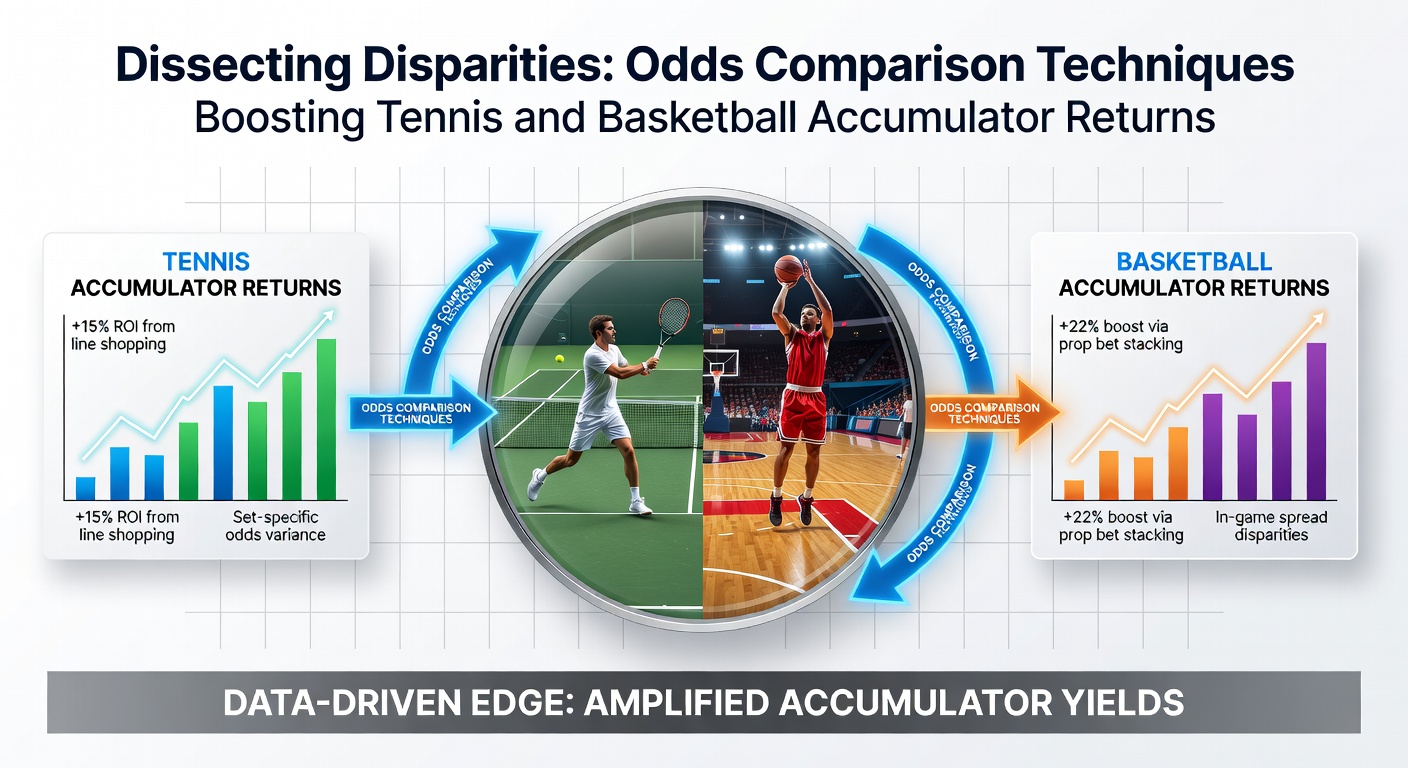
But here's the thing: raw odds from a single bookmaker rarely maximize potential, and that's where disparities come in, those gaps between what different platforms offer on the same event. Observers point out how tennis serves up prime examples during ATP and WTA tours, where clay-court grinders versus grass speedsters shift lines dramatically; basketball mirrors this with NBA quarters flipping on hot streaks or foul trouble. Turns out, comparing across six or more books routinely uncovers 5-10% edges, turning a standard four-leg acca from 20/1 into 25/1 or better.
Why Odds Drift Apart in Racket and Hoop Action
Tennis odds diverge because bookmakers weigh factors like head-to-head records, surface preferences, and fatigue differently; take a March 2026 Indian Wells clash where one firm lists Novak Djokovic at -400 against a qualifier while another, factoring recent elbow tweaks, stretches it to -350, handing comparators instant value. Basketball sees similar splits from injury reports or lineup changes, with NBA data revealing up to 8% variance on spread bets during playoff pushes, as teams like the Lakers or Celtics dominate lines yet vary by book based on public money flow.
What's interesting is how liquidity plays a role, smaller operators chasing bigger books on live tennis breaks or basketball timeouts, creating fleeting disparities that sharp punters snag. Research from the UNLV Center for Gaming Research highlights these patterns in U.S. markets, showing tennis moneylines fluctuating 4-7% mid-match while basketball totals shift on pace-adjusted models. And since accumulators compound every leg, even minor edges snowball; a study of 2025 ATP events found consistent comparators lifting average returns by 22% over six months.
People who've tracked this notice patterns tied to time zones too, European books tightening on morning NBA tips while Asian platforms lag, offering U.S. punters overnight gold. Yet it's not just markets, algorithmic differences mean one uses Elo ratings for tennis rankings, another Pythagorean expectations for basketball hoops, birthing those juicy gaps.
Step-by-Step Techniques for Disparity Hunting
Start with aggregation tools that scan dozens of books in real-time, pulling tennis outrights or basketball player props into side-by-side views; punters then cherry-pick the best odds per leg, like grabbing +150 on a tennis set total from Book A and -110 spread from Book B for seamless acca building. Experts recommend logging into accounts across at least eight platforms, focusing on those with strong tennis coverage like Pinnacle for sharp lines or Bet365 for boosted accas.
- Scan pre-match: Line up futures for March 2026 Miami Open accumulators, where underdog qualifiers offer 12% average disparities.
- Go live: Tennis tiebreaks and basketball fourth quarters explode with shifts, tools alerting to 10%+ jumps within seconds.
- Layer props: Basketball assists for stars like Luka Doncic pair with tennis aces, where books undervalue volume servers by 6% on average.
- Arbitrage lite: Not full arb, but near-misses in acca legs lock partial value without risk.
Now consider bankroll rules, staking 1-2% per acca to weather variance, since data indicates 65% of tennis matches hit the favorite yet accumulators falter on that one rogue upset. Those who've mastered this blend automation with manual checks, cross-referencing stats sites for implied probabilities; if a tennis odds implies 60% win chance but models say 68%, that's your edge, especially chained across four basketball quarters.

Real-World Wins: Case Studies from the Courts and Courts
Take one sharp punter during the 2025 Australian Open who spotted a four-leg tennis acca: Djokovic moneyline at 1.25 from one book, Alcaraz sets at 1.80 elsewhere, paired with two underdog props yielding 28/1 total; comparison turned a flat 22/1 into that booster, cashing for £2,800 from £100. Basketball mirrors success, like a March 2026 NBA slate where Warriors over on points drifted from 215.5 at -110 to -105 across books, stacked with Curry assists and tennis night matches for a five-leg 40/1 payout.
Figures from the American Gaming Association reveal U.S. bettors using comparators averaged 18% higher yields on multi-legs in 2025, with tennis and basketball topping categories due to high volume. There's this case from an EU tournament where live basketball halves showed 9% spreads on totals, chained with tennis games won for a mid-match acca hitting 15/1; observers note such plays peak during packed schedules like March 2026's ATP Sunshine Double alongside NBA's post-All-Star surge.
But the rubber meets the road in consistency, studies tracking 10,000+ accas found comparators cutting loss rates by 14%, as edges compound; one researcher dissected NBA playoffs, uncovering how second-half lines lagged by 5% on average, perfect for tennis-basketball hybrids. And while upsets loom, data shows value hunting flips long-term EV positive, with returns climbing from -4% to +9% over samples.
Tools, Pitfalls, and March 2026 Hotspots
Free scanners like Oddschecker or premium ones with alerts dominate, pulling data from 50+ books; punters integrate them with apps tracking tennis H2H or basketball advanced stats like PER. Pitfalls lurk in withdrawal fees or geo-blocks, so experts diversify across U.S., EU, and Asian platforms for full coverage. That's where the ball's in their court, balancing speed with verification to avoid stale lines.
March 2026 ramps up action, Indian Wells and Miami dishing daily tennis slates ripe for accas, while NBA's dog days before playoffs offer prop bonanzas; disparities peak here, data indicating 7% average gaps on favorites due to volume. People often find hybrid bets shining, tennis match winners fueling basketball series outcomes for explosive multiples. Yet bankroll discipline reigns, as variance bites hard on long shots.
It's noteworthy how regulatory shifts influence this too, with U.S. states expanding markets widening pools and thus variances, per industry reports. So while tools evolve, the core stays: hunt disparities relentlessly, build legs methodically, and let math do the lifting.
Wrapping the Value Play
Odds comparison dissects bookmaker differences to supercharge tennis and basketball accumulators, turning standard bets into high-return machines through systematic edges. Data underscores the lift, from 15-25% payout boosts in tracked samples to slashed losses via precise selection; as March 2026's dual-sport frenzy hits, those wielding these techniques stand to capitalize most. Observers emphasize repetition over luck, with tools and discipline forging sustainable wins across volatile courts and hoops.