Cross-Sport Data Integration: Shared Models Refine Tennis and Basketball Previews
Felix Carter · Aug 11, 2026
Cross-Sport Data Integration: Shared Models Refine Tennis and Basketball Previews
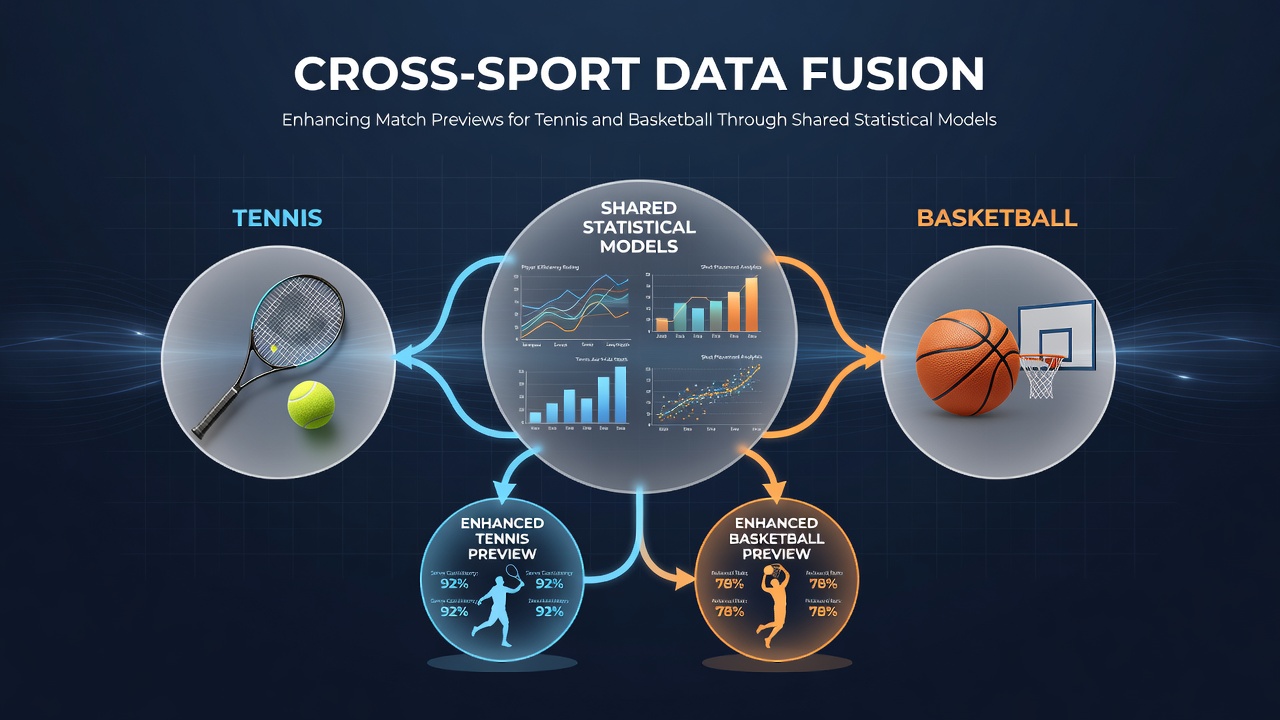
Analysts in sports performance have turned to cross-sport data fusion to build shared statistical models that draw on patterns from tennis and basketball, and these approaches refine match previews by combining datasets that once remained separate. The process identifies overlapping variables such as player fatigue indicators, rally or possession efficiency, and momentum shifts, then feeds them into unified algorithms that generate forecasts for both individual sports.
Core Principles Behind Shared Statistical Models
Shared models start with feature alignment, where metrics like serve win percentages in tennis map onto field goal efficiency in basketball because both reflect scoring under pressure, while movement data from court tracking systems supplies the common substrate. Researchers at institutions including the University of Waterloo have published frameworks that normalize these inputs through z-score transformations and time-series alignment, allowing a single model to process data streams collected during matches that unfold at different paces.
August 2026 schedules place the hard-court swing of the tennis calendar alongside summer league and exhibition basketball events, and analysts note that this overlap supplies fresh datasets for testing fusion accuracy. Models trained on prior seasons demonstrate improved calibration when they incorporate real-time adjustments for environmental factors such as court surface speed or arena altitude, variables that appear in both sports but receive different weightings.
Application in Tennis Match Previews
Tennis previews benefit when basketball-derived possession tempo metrics inform estimates of point duration under fatigue. One study tracked ATP and WTA players who also competed in exhibition basketball events, and the resulting data showed that athletes maintaining higher average heart rates during crossover drills recorded lower first-serve percentages in subsequent tennis matches. Shared models apply these correlations to adjust expected rally lengths before a tournament begins.
Coaches and data teams now feed historical match logs into neural networks that treat each sport's performance vectors as parallel channels, and the output produces probability distributions for set outcomes that account for carry-over effects from recent basketball-style training sessions. Observers note tighter confidence intervals around projected win probabilities compared with single-sport baselines.
Enhancements for Basketball Previews
Basketball analysts apply the same fusion layer to preview player prop totals and team efficiency ratings. Tennis stroke recovery times translate into estimates of defensive close-out speed, while serve hold percentages map onto transition offense success rates after steals. Data from the Australian Institute of Sport has supplied longitudinal samples that link repeated high-intensity efforts across both disciplines, enabling models to forecast foul trouble or turnover spikes with greater precision.
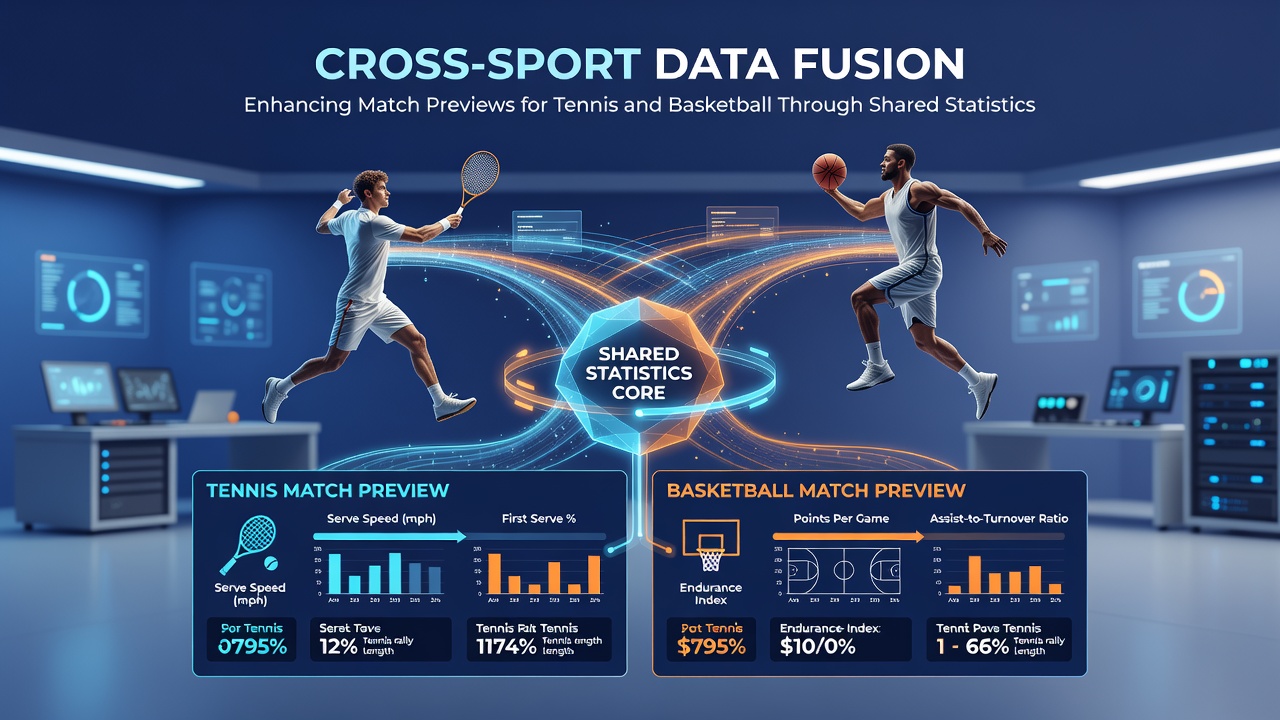
Teams preparing for August 2026 exhibition schedules have begun embedding these fused outputs into pre-game reports, and the adjustments appear most pronounced when travel schedules create short recovery windows between events in different sports. The models flag elevated risk for reduced three-point accuracy when prior tennis workloads exceed certain thresholds, giving coaching staff objective signals rather than anecdotal impressions.
Implementation Challenges and Technical Adjustments
Data fusion requires careful handling of differing match lengths and scoring granularities, yet practitioners address these through resampling techniques and event segmentation that align five-minute basketball intervals with tennis game segments. Outlier detection routines borrowed from both domains help filter noise introduced by rule changes or equipment variations. Industry reports from the Sports Analytics Research Group at the University of British Columbia document that cross-validation across seasons reduces mean absolute error in preview predictions by measurable margins once shared parameters stabilize.
Hardware compatibility remains an ongoing task because wearable sensors calibrated for one sport sometimes require firmware updates before their output feeds cleanly into joint models, but standardization efforts continue through collaborative working groups that include equipment manufacturers and academic partners.
Conclusion
Cross-sport data fusion supplies analysts with a growing toolkit for refining previews in tennis and basketball, and the approach continues to evolve as August 2026 competition calendars generate additional overlapping datasets. Organizations that maintain unified statistical pipelines gain access to performance signals that single-sport models overlook, while technical refinements in feature alignment and validation keep the outputs grounded in observable patterns across both disciplines.