Altitude Adjustments: How Elevation Changes Reshape Expected Totals in Western Conference Basketball Games
Jakob Hartmann · Jun 28, 2026
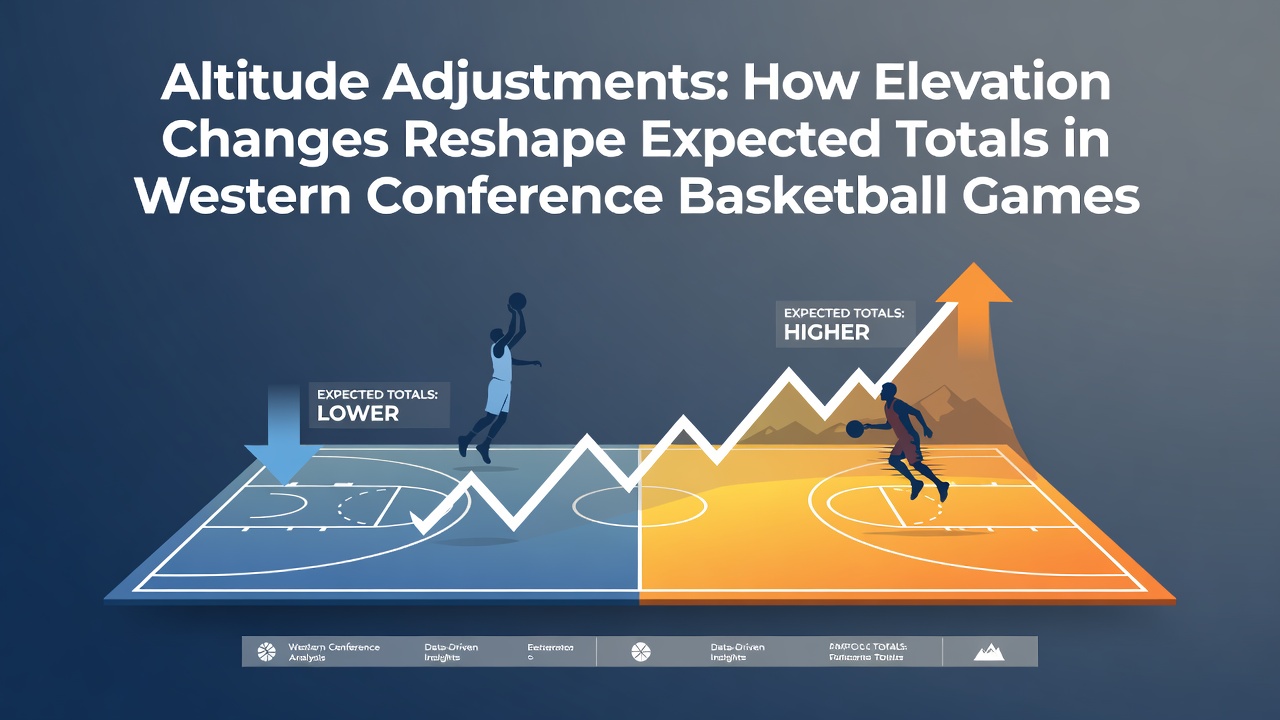
Altitude Adjustments: How Elevation Changes Reshape Expected Totals in Western Conference Basketball Games
Data from multiple NBA seasons reveals that elevation levels in Western Conference venues consistently alter scoring patterns, with thinner air at higher altitudes allowing basketballs to travel farther and faster while simultaneously increasing player fatigue over the course of games. Observers note that arenas situated above 4,000 feet produce measurable shifts in expected point totals compared to sea-level facilities, and researchers have tracked these variables through detailed statistical breakdowns of team performances. Teams visiting Denver often encounter conditions at 5,280 feet where reduced oxygen density influences both offensive efficiency and defensive recovery times, leading analysts to adjust projection models accordingly before matchups begin.
Key Venues and Their Elevation Profiles
Western Conference facilities span a wide range of elevations that create distinct playing environments, and data compiled through 2026 highlights how these differences accumulate across a season. The Pepsi Center in Denver stands at the highest point among active arenas, while the Delta Center in Salt Lake City sits at approximately 4,226 feet, and both locations demonstrate repeatable impacts on game flow according to performance tracking systems. In contrast, lower-elevation sites such as those in Los Angeles and Phoenix register closer to sea level, producing baseline scoring benchmarks that visiting teams reference when preparing travel itineraries and conditioning plans.
Studies conducted by academic institutions have measured how reduced air density at these heights decreases drag on the basketball, resulting in slightly longer three-point trajectories and altered arc patterns during jump shots. Figures from the 2025-26 regular season indicate that average field goal percentages on long-range attempts rise modestly in Denver compared with road games at lower sites, while free-throw accuracy remains largely unchanged because those shots occur from a stationary position. Teams that maintain larger rotation depths tend to mitigate some fatigue effects, yet the cumulative strain still registers in fourth-quarter statistics across multiple seasons.
Impact on Scoring Totals and Game Pace
Statistical reviews show that expected totals in Denver-hosted games often exceed league averages by several points per contest, driven primarily by increased three-point volume and higher assist rates that reflect quicker ball movement in the thinner atmosphere. Data indicates that pace of play accelerates early in games at altitude before slowing as oxygen debt builds among players who have not acclimated, and this pattern repeats in Salt Lake City with slightly smaller margins. Analysts tracking Western Conference schedules note that back-to-back situations amplify these effects when teams travel from coastal cities directly into high-elevation venues without intermediate recovery days.
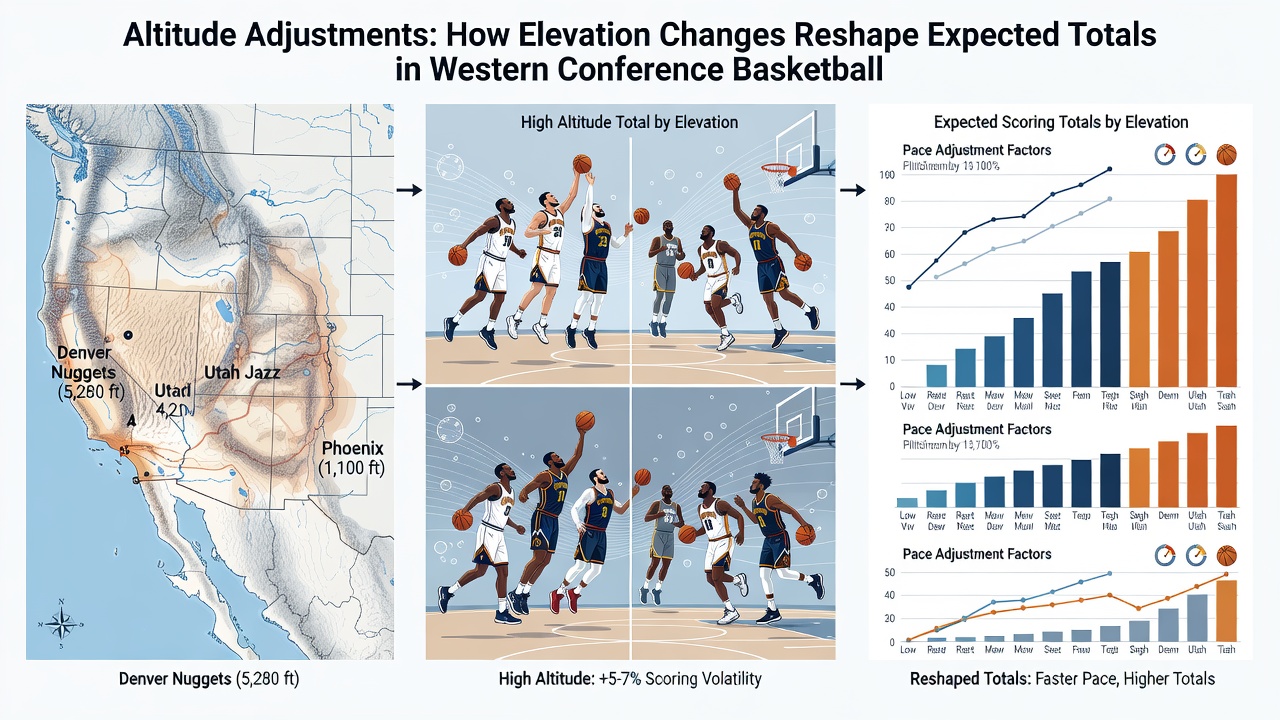
Research published in sports physiology journals demonstrates that heart rate and perceived exertion levels climb faster at elevation, prompting coaches to shorten rotation minutes for key players and adjust defensive schemes that require sustained lateral movement. As of June 2026, performance databases reveal that road teams posting lower three-point attempt rates in Denver games record reduced overall outputs, whereas squads emphasizing transition opportunities capitalize on the altered ball flight characteristics. These adjustments feed directly into projection systems used by front offices when evaluating season-long trends across the conference.
Player Adaptation and Statistical Adjustments
Players with prior experience at high altitude exhibit faster adaptation periods, and longitudinal data collected by league tracking partners shows improved sprint recovery metrics among those individuals during subsequent visits. Teams based permanently at elevation maintain built-in physiological advantages that manifest in home/road splits, particularly in rebounding and second-chance points where endurance plays a larger role. Visiting rosters that incorporate altitude simulation training in advance demonstrate smaller deviations from their season averages, according to comparative analyses released by university research groups.
External factors such as travel distance and time zone changes compound elevation effects, yet statistical models isolate altitude as an independent variable with consistent predictive value across Western Conference schedules. Organizations reviewing historical box scores find that total points in Denver games trend higher during early-season matchups before stabilizing as more players gain familiarity with the environment, and similar but attenuated patterns appear in Utah contests.
Conclusion
Elevation remains a measurable factor that reshapes expected scoring outputs in Western Conference basketball, with data from venues like Denver and Salt Lake City confirming repeatable influences on shooting efficiency, pace, and fatigue accumulation. Researchers continue to refine models that incorporate these variables alongside traditional metrics, providing clearer frameworks for understanding how altitude interacts with team strategies and individual conditioning. As schedules evolve through 2026 and beyond, ongoing collection of performance data at varying elevations supports increasingly precise adjustments to game projections across the conference.