Altitude Adaptation Timelines and Performance Variations Across Mountain Sports Venues
Paul Reed · Oct 17, 2026
Altitude Adaptation Timelines and Performance Variations Across Mountain Sports Venues
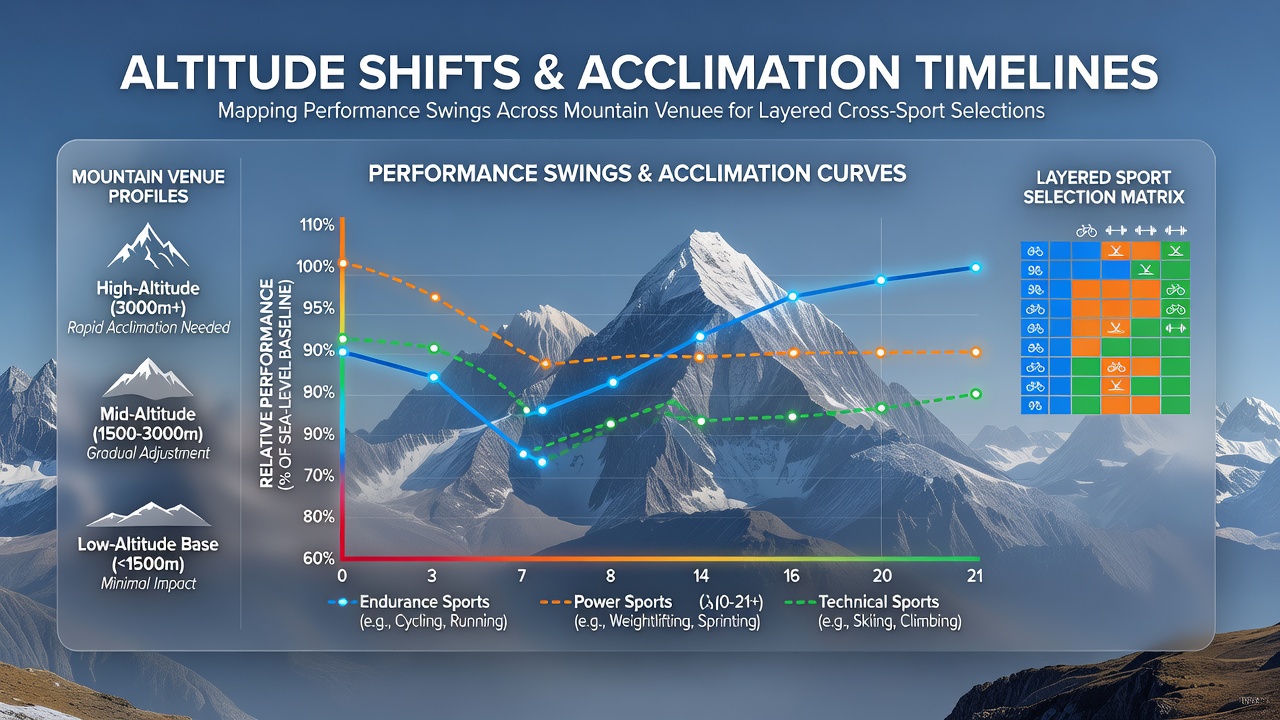
Altitude changes affect oxygen availability and cardiovascular responses in athletes who compete at elevations above 1500 meters, with data from studies conducted by the American College of Sports Medicine showing measurable declines in endurance output during initial exposure periods. Researchers track these shifts through controlled trials that measure VO2 max reductions, heart rate increases, and lactate threshold alterations across disciplines such as cycling, distance running, and cross-country skiing. Performance swings appear most pronounced in events lasting longer than 30 minutes, where sustained aerobic demand meets reduced partial pressure of oxygen.
Initial Responses to Elevation Changes
Teams and individual competitors who arrive at mountain venues experience immediate physiological adjustments within the first 24 to 48 hours, including elevated breathing rates and plasma volume contraction that can reduce stroke volume by up to 10 percent according to measurements recorded at facilities like those operated by the Australian Institute of Sport. These early adaptations set the stage for longer-term hematological changes, such as increased red blood cell production that typically peaks between 10 and 14 days. Observers note that short-burst power sports register smaller decrements than prolonged efforts, yet even sprint athletes display altered recovery intervals when competing above 2000 meters.
Acclimation Periods by Sport Category
Cyclists preparing for multi-stage mountain races often follow protocols that extend 18 to 21 days at moderate altitude before key competitions, allowing erythropoietin-driven adaptations to stabilize power output on climbs exceeding 2000 meters. Distance runners, by contrast, frequently utilize shorter camps of 10 to 14 days combined with periodic returns to sea level to maintain race-pace specificity, a strategy documented in longitudinal tracking by Canadian sport science groups. Skiers and biathletes incorporate on-site acclimation of five to seven days prior to events, leveraging natural training environments at venues such as those in the Alps where daily altitude variations occur during course inspections and warm-ups.
Layered Selection Considerations Across Disciplines
Coaches compiling cross-sport athlete pools examine acclimation timelines alongside venue-specific elevation profiles to optimize selection sequences, particularly when events span multiple mountain locations within a single season. Data compiled from competitions held through 2025 and into October 2026 at sites ranging from Colorado to the Pyrenees reveal that athletes who complete staged acclimation blocks maintain closer to baseline performance metrics than those with abbreviated exposure. Layered selections therefore prioritize individuals whose sport demands align with documented recovery windows, reducing cumulative fatigue across successive high-elevation stages.
What's interesting is how individual variability influences these patterns, with genetic factors affecting erythropoietin response rates leading some athletes to reach full adaptation faster than others in the same training cohort. Monitoring tools now include wearable sensors that capture real-time oxygen saturation and heart rate variability, providing objective markers for coaches to adjust timelines without relying solely on subjective fatigue reports.
Venue-Specific Mapping of Performance Data
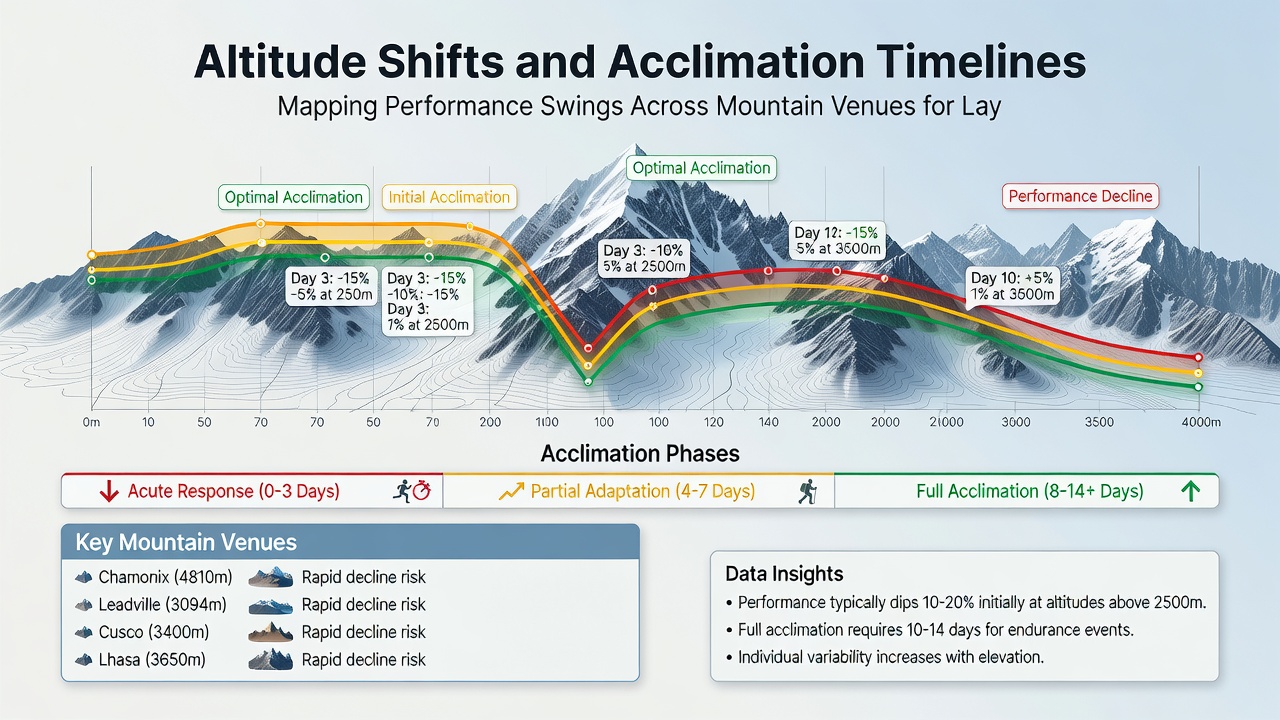
Venues such as those at 2500 meters or higher produce distinct swing patterns compared with moderate elevations between 1500 and 2000 meters, where the rate of performance decline stabilizes after initial days. Analysis of race results from events scheduled in late 2026 shows endurance athletes losing between 3 and 7 percent of sea-level capacity at the higher band, with partial recovery occurring once acclimation extends beyond three weeks. Mixed-sport programs that rotate athletes between disciplines must therefore map these venue profiles against each athlete's primary event demands to avoid overlapping high-stress periods.
Researchers at institutions including the University of Cape Town have contributed comparative datasets that separate the effects of hypoxia from those of terrain difficulty, allowing selectors to isolate altitude as an independent variable. These findings support scheduling decisions where acclimation windows precede the most demanding mountain segments rather than following them.
Conclusion
Altitude shifts and acclimation timelines shape performance outcomes across mountain venues in measurable ways that inform cross-sport athlete selections. Evidence from multiple research bodies demonstrates that structured exposure periods mitigate initial decrements while venue mapping provides practical guidance for sequencing events. Continued collection of physiological and competition data through 2026 and beyond refines these models, supporting more precise preparation strategies for athletes operating at elevation.